



That’s how much companies invest in SEO in 2026, while Google earns $380B.
For every $4 a company invests in Google Ads, only $1 goes into SEO, even though organic search pulls in up to 3x more traffic.
The math is clear:
SEO is still underutilized, and those who are ranking reap huge profits.
Generating traffic through SEO is 3-5x more affordable and converts twice as well compared to paid search.
So why are so many companies fumbling SEO, especially now that AI Overviews are swallowing the top of the results page?
In this piece, I will show you:
- How to fix the common content problems that bury you on the 10th page of Google.
- Three less-known advanced keyword research techniques that most SEOs have never even tried, and that AI still can’t replicate.
Why Your Keyword Research Is Burning Cash in 2026
Before I show you what works, let me be blunt about what doesn’t.
For 15 years, I’ve watched clients burn through budgets, repeating these mistakes.
Mistake #1: You’re All Fishing in the Same Pond
SEMrush. Ahrefs. Google Keyword Planner. Solid platforms overall.
But here’s the problem: when every SEO professional and their intern is pulling from the same keyword tools, everyone lands on the same “opportunities.”
What was intended as research turned into a group project where everyone copied the same answer.
You need to find the terms that these tools don’t surface. Run a competitor keyword analysis on any crowded niche, and you’ll see the same terms recycled across dozens of sites, all fighting for the same positions.
Mistake #2: Treating Research as a Checkbox
In most teams, keyword research looks like this: open tool, sort by volume and difficulty, pick what looks promising, move on.
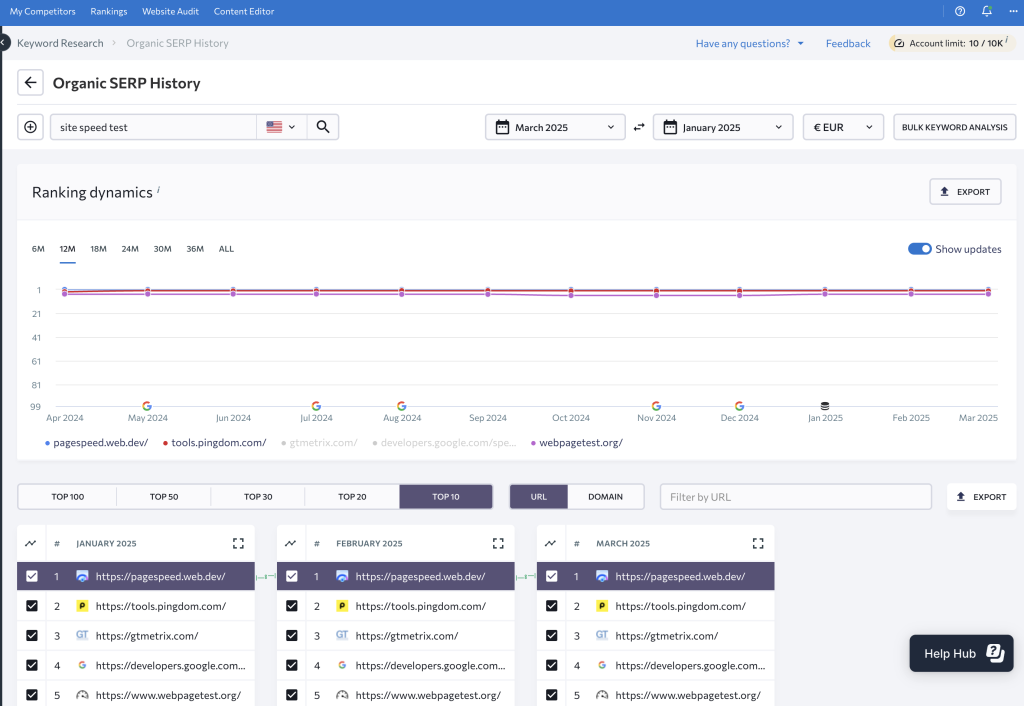
Fast. Feels productive. And it’s how you end up targeting a keyword marked “easy” that has five authoritative domains locked into the top spots.
You won’t see that unless you actually pull up the SERP and look at what’s ranking. And most people never look.
If you’re not manually reviewing the first page of the search engine results for your terms, you’re flying blind.
Mistake #3: Chasing Rankings Instead of Revenue
“Can we rank for this?” is the wrong first question.
Ask instead: “If we rank for this, does it lead to a sale?”
A keyword with 10,000 monthly searches that attracts people who will never buy from you is worth less than a keyword with 100 searches from people ready to pull out their credit card.
I see this constantly. Teams celebrate ranking #3 for a high-search-volume term, even as their pipeline stays dry. The keyword brought traffic. It didn’t bring customers. Those are two very different things, a distinction often blurred by digital marketing myths.
And now there’s a 2026 factor that makes all three mistakes even more expensive: Google’s AI Overviews have come to stay.
For many queries, the search engine generates a complete answer right there in the results. The problem? The user never clicks through! Your ranking is irrelevant if Google answers the question before anyone reaches your link.
If your keyword research techniques don’t account for the new reality, you’re optimizing for a bygone era.
The Zero-Click Trap: 60% of Searches Go Nowhere
Let’s put a number on it.
Over 60% of Google searches now end without a click. That figure has been climbing steadily, and with AI Overviews expanding across more query types into 2026, it’s accelerating.
What does this mean for your strategy?
Not all search volume keywords lead to real web traffic. A keyword showing 10,000 monthly searches might deliver only 3,000 actual clicks to websites. The rest gets absorbed by AI Overviews, featured snippets, knowledge panels, and people who just reformulate their query.
This makes zero-click search keywords one of the most important filters in modern keyword research.
Before you commit to targeting any term, you need to answer one question: Is Google already giving this answer away for free?
How to Tell If a Keyword Will Actually Send You Traffic
Not every keyword is equally exposed. I sort every term into one of three buckets:
-
AI Overview-proof. No AI Overview triggers. Commercial queries, highly specific searches, opinion-based topics. Google won’t risk an automated answer here. These are your safest bets for organic traffic.
-
AI Overview-optimized. An AI Overview appears, but it cites sources. You can fight your way into those citations with the right content structure. Visibility actually increases if you win a spot.
-
AI Overview-vulnerable. The AI fully handles the query. The searcher gets what they need and never clicks. Your ranking is decoration.
Every technique that follows has this filter baked in. The advanced keyword research techniques below are built for a world where search volume alone tells you almost nothing.
3 Advanced Keyword Research Techniques That Integrate Technology and Psychology
Consider this your unfair advantage: six methods I’ve developed and stress-tested across years of client work, designed specifically for the 2026 search landscape.
1. Deep Demand Keywords: Find What Your Competitors Can’t See
This is the technique that consistently produces our biggest wins. I keep coming back to it because it works in virtually every industry I’ve tested it in.
The idea is dead simple: stop targeting the obvious keyword. Instead, find the terms people search right before they search the obvious keyword.
Two examples:
-
Immigration law. “Chicago immigration lawyer” is impossibly competitive. But “n400 processing time Chicago” targets someone deep in the immigration process, frustrated, and very close to deciding they need a lawyer.
-
E-commerce. “Running shoes” is a nightmare. But “carbon plate stack height comparison” reaches a buyer actively evaluating specific technology before purchasing. Less web traffic, but the visitors you get are ready to buy.
The gold standard, especially for local keyword research, is: go one layer deeper than the seed keyword. Find the specific, technical, process-related terms your audience uses when they’re close to a decision but haven’t yet typed the head term.
How It Works in 5 Steps
-
Prompt an LLM for pre-intent queries. Ask ChatGPT: “Give me 50 seed keywords someone would search right before they look for [your service]. They’re deep in the decision process but haven’t typed [main keyword] yet. Focus on pain points, technical terms, and process queries.”
-
Run the best candidates through your keyword tools. Check competition and search volume. You’ll consistently find keyword opportunities nobody else is targeting because they never thought to look. Run a competitor keyword analysis alongside this to confirm the gaps are real.
-
Validate with a small ad spend. These terms fly under the radar, so you can test them cheaply and collect data fast via Google Ads, instead of waiting 3 to 6 months for organic results.
-
Kill the losers early. If the data says a term doesn’t convert, cut it. No attachment. Move on.
-
Double down on what converts. Build full content pieces around the validated winners. You now have data, not hope.
Why This Isn’t a Long-Tail Play
People will call this a long-tail keyword strategy. It’s not.
You’re looking for compact, non-obvious terms, often short, that the standard keyword generation process would never surface. These aren’t long phrases nobody types. They’re specific terms that exist in a blind spot between good, audience-focused website copywriting and what keyword tools suggest.
And because most SEOs operate without any feedback loop (they publish and hope), deep demand keywords give you something rare: validation before you invest heavily.
2. Knowledge Graph Mining: Think in Entities, Not Words
Google stopped thinking in keywords years ago. It thinks in entities and relationships.
A page about “apple” needs context. The fruit? The company? The record label? Google resolves this through its Knowledge Graph, a massive database of entities and how they connect.
This matters for your keyword research because the search engine evaluates your content not just by whether it mentions the right words, but by whether it demonstrates real understanding of how concepts relate.
How to Extract Google’s Entity Map in 4 Steps
-
Analyze the top-ranking pages for your target topic. Not just what they say, but what entities they reference.
-
Extract the entities Google associates with it using tools like InLinks, Surfer’s entity analysis, or Google’s Natural Language API.
-
Map the relationships. What you get back is a web of concepts Google expects to see when evaluating content on your subject.
-
Build your content plan around the map. Cover the entities and relationships that matter, not just the keywords that match a phrase.
From Keyword Clustering to Topical Authority
This feeds directly into keyword clustering. Instead of grouping keywords by similar phrasing, you group them by semantic relationships.
“Keyword difficulty,” “SERP analysis,” and “search intent” look like completely different topics at the word level. Google understands they’re deeply connected concepts within the broader entity of “keyword research.”
Build your content around entity clusters, and you signal to Google that your site has genuine depth. This is how topical authority actually works in 2026. Not through publishing volume. Through demonstrating how concepts relate to one another.
3. Affective Keyword Analysis: The Psychology Layer Most SEOs Skip
Most SEOs classify keywords by intent: informational, commercial, navigational, transactional. That’s useful. But I think it’s incomplete in a way that costs real money.
Consider this: two people type the exact same query. One is calmly researching at 2 PM on a Tuesday. The other is panicking at midnight because their site just crashed during a product launch.
Same keyword. Wildly different conversion potential.
Affective keyword analysis adds the human element back in.
Two Lenses to Add to Every Keyword Spreadsheet
-
Emotional state. Is the searcher calm, anxious, frustrated, or excited? Keywords tied to high emotional arousal, especially frustration or urgency, convert at significantly higher rates.
-
Awareness level. Is the searcher unaware, problem-aware, solution-aware, product-aware, or most-aware? Solution-aware and product-aware keywords are where the money lives.
How to Classify 100+ Keywords in Minutes
Add two columns to your keyword spreadsheet: “likely emotional state” and “awareness level.”
Feed your entire list to ChatGPT and ask it to classify each term across both dimensions. What would take hours of manual analysis gets done in minutes. You still make the strategic calls. The AI handles the categorization.
Then prioritize: high emotional arousal + solution or product-aware = your highest-converting targets.
Every time we’ve performed technical SEO on a client’s keyword list, we’ve found conversion-rich terms that the purely technical analysis completely missed.
4. Your AI Overviews Keyword Strategy: The Non-Negotiable 2026 Step
This is the technique that separates 2026 keyword research from everything that came before. If you only take one new idea from this article, make it this one.
You know the three buckets. Now here’s what you actually do with them.
Having a deliberate AI Overviews keyword strategy is no longer optional. It’s the difference between chasing search volume that converts to clicks and chasing numbers that exist only on a spreadsheet.
Step 1: Audit Every Target Keyword for AI Overview Presence
Take your full keyword list and check each term. You have two options:
-
Manual spot-check (for lists under 50 terms). Open a window, search each keyword, and note: Does an AI Overview appear? If yes, does it cite external sources, or does it fully resolve the query on its own?
-
At-scale audit (for larger lists). Use SEMrush’s SERP features filter to flag which keywords trigger AI Overviews. Specialized tracking tools like Nightwatch or SE Ranking’s SERP feature monitoring can automate this across hundreds of terms.
Tag every keyword green, yellow, or red based on the buckets.
Step 2: Match Each Category to a Content Action
This is where strategy turns into execution.
Green (AI Overview-proof): These are your highest-priority organic targets. No AI interference means traditional SEO still works. Pour your best content, your strongest keyword placement, and your link-building resources into these. Commercial queries (“best CRM for agencies”), local searches (“tax attorney near me”), subjective topics. Go all in.
Yellow (AI Overview with citations): Winnable, but you play by different rules. Google is pulling content into the Overview and linking back to sources. Your job is to become one of those sources.
-
Structure your content with a clear, direct answer in the first 2 to 3 sentences under each heading. Write the snippet Google wants to quote.
-
Use definition-style formatting: “X is…” or “The key difference is…” These patterns get pulled into AI Overviews at a higher rate.
-
Include original data, specific numbers, or unique frameworks. Google’s AI prefers citing content that adds something it can’t generate on its own.
Red (AI Overview-vulnerable): Deprioritize for organic traffic. Don’t ignore them entirely. They still serve as supporting content in a topic cluster. But they should never be the centerpiece of your content calendar.
Step 3: Rebuild Your Content Calendar Around the Results
Once every keyword is tagged:
-
Reorder your publishing queue. Green to the top. Yellow gets content specifically designed for citation. Red drops to the bottom or becomes a supporting piece.
-
Kill planned content that won’t deliver. I’ve personally scrapped dozens of briefs after running this audit. It stings in the moment. It saves thousands in wasted production.
-
Re-audit quarterly. AI Overviews are expanding into new query types every month. A keyword that was green in January might be yellow by April. Build this into your recurring workflow, not as a one-time exercise.
The first time we ran this process for a client at Alpha Efficiency, we cut 30% of their planned content calendar. The remaining 70% generated more traffic than the full list would have. Every piece targeted a keyword with real clicks.
5. Zero-Volume Mining: The Terms Nobody Targets That Print Money
Here’s something I wish someone had told me years ago: keyword tools are guessing.
They estimate search volume based on sampling. For newer, niche, or highly specific terms, they often report zero volume, even though real people are absolutely searching for them.
Zero-volume keywords are some of the most valuable targets in 2026, precisely because nobody else bothers with them.
Four Places to Find Them
-
Reddit and niche forums. Look at how your audience actually phrases their questions. These raw, unpolished queries are gold.
-
Customer support tickets and sales calls. The language your customers use to describe their problems is almost always different from the language keyword tools suggest.
-
People Also Ask chains. Click through several layers of Google’s PAA boxes. The deeper you go, the more obscure and untapped the queries get.
-
LLM query patterns. Ask ChatGPT what questions people commonly ask about your topic. It draws on a different dataset than traditional keyword-generation methods and surfaces angles they miss.
Why Less Volume Wins in a Zero-Click World
Zero-volume keywords tend to be specific, conversion-oriented, and almost always AI Overview-proof. They’re too niche for Google to bother generating an automated answer.
In a world where high-search-volume keywords increasingly produce zero-click results, these overlooked terms become disproportionately powerful.
I’ve seen single zero-volume keywords generate more qualified leads than top-10 rankings for competitive head terms. That’s not an anomaly. It’s the new math.
6. AI as a Research Partner (Not a Vending Machine)
Everyone is using AI for keyword research in 2026. Most are using it badly.
The typical approach: ask AI for a list of keywords, get a generic list, plug it into a tool, and end up with the same targets as everyone who did the same thing five minutes ago.
AI keyword research works when you use LLMs as thinking partners, not shortcuts. Three workflows that I’ve found genuinely useful:
Workflow 1: Seed Expansion Through ICP Pain Points
Don’t ask for keywords. Describe your ideal customer’s specific frustrations, goals, and decision process. Ask the LLM to generate the search queries that the person would type at each stage. This produces deep demand candidates that no keyword tool would surface, keyword generation driven by psychology rather than databases.
Workflow 2: Intent and Emotion Classification at Scale
Take your keyword list of 100+ terms and have the LLM classify each one by search intent, emotional state, and awareness level. What would take hours of manual work gets done in minutes. You make the strategic calls. The AI handles the grunt work.
Workflow 3: SERP Simulation for Pre-Screening
Before investing in content, ask: “What would the search engine likely show for this query? Would an AI Overview appear? What type of content ranks?” It’s not perfectly accurate, but it’s a useful first filter that catches obvious mismatches between your plan and reality.
The principle that holds all three together: AI handles the labor, you handle the judgment.
AI keyword research has to be guided by someone who understands the customers and the business goals. I’ve watched people hand the entire process to AI and end up with keyword lists that are technically fine and strategically useless. AI accelerates the work so you can spend your time on the decisions that actually move the needle.

The Full Workflow: From Raw List to Revenue in 5 Steps
Here’s how these six keyword research techniques combine into a single process:
-
Generate candidates. Use deep demand brainstorming, zero-volume mining from real audience sources, and AI-powered seed expansion to build a broad initial list. This is where keyword generation happens at scale.
-
Cluster and map. Apply knowledge graph mining to keyword clustering, leveraging entity relationships rather than surface-level similarity. Build a topical map that shows how clusters connect.
-
Filter through the affective lens. Classify each cluster by emotional state and awareness level. Prioritize where emotional arousal and buyer awareness are both high.
-
Audit against AI Overviews. Check every priority cluster for AI Overview presence. Categorize into the three buckets and adjust targeting accordingly.
-
Prioritize by conversion proximity. The final ranking of your keyword targets should weigh conversion potential over raw search volume. A keyword that brings 50 ready-to-buy visitors beats one that brings 5,000 casual browsers.
This workflow takes more effort than pulling a list from SEMrush and sorting by volume.
That’s exactly why it works. If it were easy, everyone would do it, and the advantage would disappear. The effort is the moat.
Ready to Stop Publishing Content That Goes Nowhere?
If you’re tired of watching content collect dust on page 8, or if you suspect your current SEO investment isn’t pulling its weight, let’s talk.
At Alpha Efficiency, we apply these exact frameworks for our clients. Deep demand analysis. Affective keyword mapping. AI Overview auditing. We build keyword research strategies that connect to revenue, not vanity metrics.
We work with a small number of businesses at a time, so we can go deep on the strategy that actually matters. If that sounds like what you need, contact us today and tell us about what you’re trying to achieve.
We’ll take it from there.
FAQ: Advanced Keyword Research Techniques in 2026
1. What are advanced keyword research techniques?
Advanced keyword research techniques go beyond standard volume and difficulty analysis. They include approaches like keyword clustering, emotional intent mapping, zero-volume keywords mining, and AI Overviews auditing, methods that surface high-conversion keyword opportunities conventional keyword tools consistently overlook.
2. How has AI changed keyword research in 2026?
On two fronts. Google’s AI Overviews now answer many queries directly in the SERP, making click-through analysis essential before targeting any keyword. Meanwhile, LLMs like ChatGPT enable faster keyword generation, intent classification, and deep demand discovery, turning AI keyword research from a novelty into a core part of any competitive workflow.
3. What are zero-volume keywords, and why do they matter?
Zero-volume keywords are terms that traditional tools report as having no monthly search volume. They matter because these tools frequently undercount niche, emerging, or highly specific queries. In 2026, zero-volume keywords face minimal competition and rarely trigger AI Overviews, resulting in higher click-through rates and stronger conversion potential.
4. How do you find keyword opportunities that competitors miss?
Go beyond standard keyword tools. Analyze support tickets, Reddit threads, and sales call transcripts for the real language your audience uses. Apply deep demand techniques to find non-obvious terms adjacent to high-intent searches, then run competitor keyword analysis to confirm you’re targeting gaps they’ve left open.
5. What is the best long-tail keyword strategy for 2026?
The strongest long-tail keyword strategy pairs traditional long-tail targeting with AI Overview awareness. Prioritize specific, conversion-rich queries that the search engine cannot fully answer with AI-generated responses. Focus on terms where your content delivers original depth, practical insight, or commercial value that automated answers can’t replicate.
6. How do you build an effective keyword clustering strategy?
Effective keyword clustering in 2026 relies on entity-based grouping from Google’s Knowledge Graph, not on surface-level word similarity. Map each cluster to a buyer journey stage and match it with a content format aligned to the dominant search intent. This approach builds genuine topical authority and ensures proper keyword placement across your content ecosystem.

Recent Post
Brian Dordevic
State Bar Rules on AI Use: A Lawyer’s Compliance Guide
READ MORE
Brian Dordevic
ADA Website Compliance Deadlines 2026: The Critical Compassion Gap
READ MORE
Brian Dordevic
Elements of a Good Website That Turn Clicks Into Cash
READ MORE